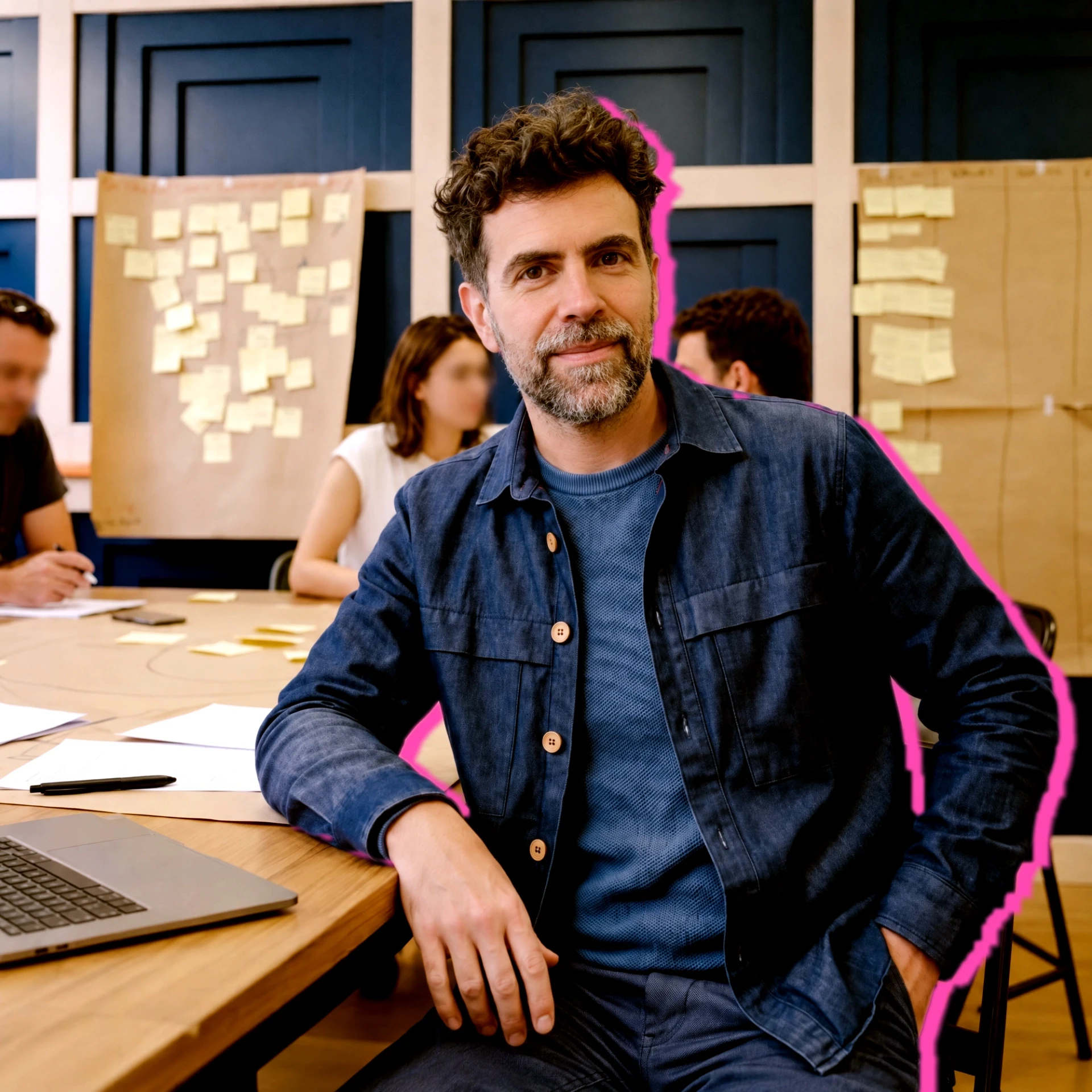
From interaction to systems, twenty years of expanding the scope of what I can shape.
I thrive as a Head of Design because I can’t look at anything for long without wanting to understand the system that produced it—and how to make it better, whether it is a digital product, an organisation, a community, or the practice of Design itself.
I started with interaction, then product, service and experience. Then teams, organisations, and the systems around them. At each step, the scope of what I could design grew by building on the layers before it. I still care as much about the pixel as I do about the business model that makes Design possible.
That progression was built on frustrations as much as successes. I kept reaching the limits of one scale and had to learn the next so the work could hold together. A good interaction needs a well-framed product. A good product needs an organisation that makes good decisions. And a good decision needs people who can work in concert with others, hold a vision, and adjust it when reality demands.
And for anyone who wants to go deeper into the case studies and methods I share, I’ve been writing about all this on Medium for eight years.
I thrive in complexity when there is something worthwhile to make of it.
What draws me is less an industry than a type of situation. What connects Biogen, ManoMano, Ubisoft, PSA, BNP Paribas, CCFD-Terre Solidaire, the French Ministry of the Economy and Netwo is a combination of many actors, many constraints, decisions to make, and products, services or experiences to design.
I have never had to choose between understanding the system and designing the experience. The two have always had to happen together: reframing a reduced Design function at Biogen, building a design framework at scale at ManoMano, or bringing four divisions together around an architecture that still underpins CCFD-Terre Solidaire’s website five years later.
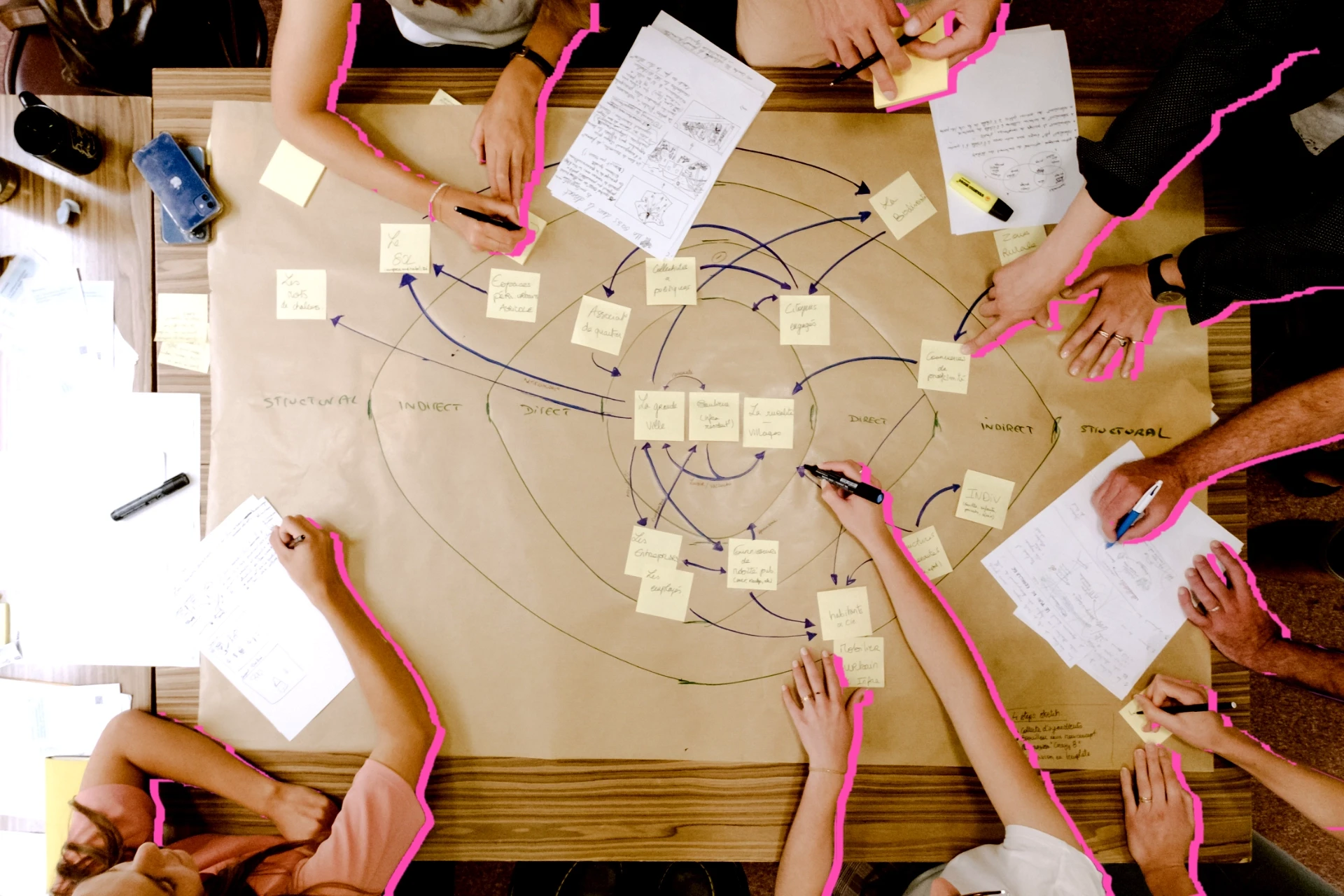
One characteristic does matter: the mission has to be worth serving.
The organisation’s mission, vision and values must serve something worthwhile, fair and beneficial to the people and systems it affects.
I’ve kept learning throughout my career.
I started in neuroscience (neurophysiology and genetics) then moved into sociology and interaction ergonomics to bring my career closer to making. Throughout it, I’ve kept learning through many different programmes, particularly in management, communication and design practice. Three of them fundamentally changed how I work:
The d.MBA gave me the language of governance: building a business case, testing a business model before designing it, connecting a Design decision to a P&L and to testable assumptions. It gave my Design trade-offs the grounding to stand up in front of Finance leadership on equal footing with any other function.
The Sustainable Innovation by Design Specialized Master at ENSCI-Les Ateliers raised a different question: how far can Design actually act? Not only on a product or a team, but on the systemic conditions—regulatory, territorial, ecological—in which an organisation operates.
That question, and a two-year professional thesis, led to my work on Transformative Design, now formalised in a 290-page playbook that I designed and published from end to end. A complete design project serving the design community and organisations that want to act at a deeper level.
Leading Complex Projects at IDEO U focused on the boundary between strategy and operations: how to guide a team when information is incomplete and conventional management and leadership frameworks are no longer enough.
It gave me tools to balance logic and intuition, clarify the “why” of a project before its mechanics, turn a blockage into a way forward, and clear the fog around decisions. These are reflexes I now rely on whenever a team needs to move before every unknown has been resolved, which is to say all the time, right?
These programmes changed the scale at which I can practise my craft.
I centre Design
on people,
on the system that produces it,
and on the system it becomes part of.
Designing only for the end user is no longer enough when what we build also changes how teams work, how leaders decide, or the ecosystem of actors and lives it becomes part of. I practise a form of Design that is both human-centred and system-aware: attentive to lived experience, responsible for what it produces beyond itself.
A broad practice of Design—to understand, solve, simplify, prototype and transgress, depending on what the situation calls for.
01 — Understand before acting
02 — Make complexity actionable
03 — Connect macro and micro
04 — Design the system, not just the output
05 — Excel where it matters
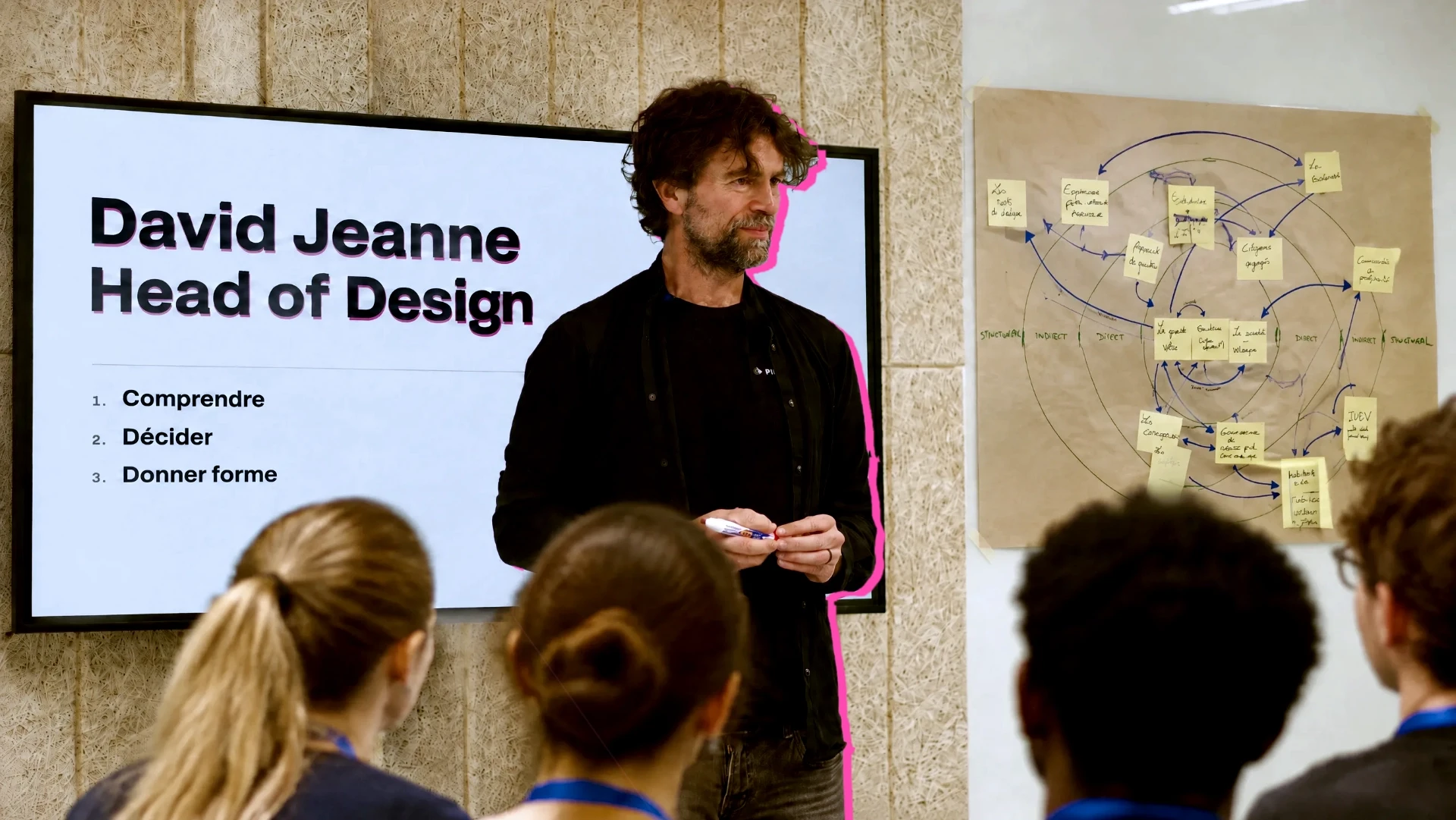
I run experiential workshops at Burns. I’m fascinated by large-scale narrative worlds. Both shape how I design.
For more than twelve years, I’ve designed and facilitated experiential workshops at Burns: participant-built events inspired by Burning Man, centred on co-creation and collective transformation. I’m also part of DPW, the build crew. They became one of the fields of observation behind my work on Transformative Design: at the scale of an entire community, you can see what makes an experience genuinely transformative rather than simply memorable.
I’m also fascinated by what Marvel built with its cinematic universe: around forty films and more than twenty series held together coherently over fifteen years. Many see it as a symptom of cinema becoming poorer. I see an unmatched exercise in storytelling at scale—the same discipline I try to bring to a product system or an organisation: keeping a multitude of parts coherent over time.
And I love getting lost in board games that combine narrative immersion with systemic complexity—Edge games, Battlestar Galactica above all—where every session becomes a lesson in cooperation under uncertainty and collective decision-making under pressure.
After twenty years designing products, experiences, teams and systems, what comes next is clear.
I’m looking to lead a Design and Transformation function at the intersection of product, experience, innovation and organisation.
Are you an organisation scaling up, facing real complexity in the needs of the people you serve, where Design already exists but now needs to become a strategic capability?
Let’s talk.